WE believe Restorative practices can work to address IPV
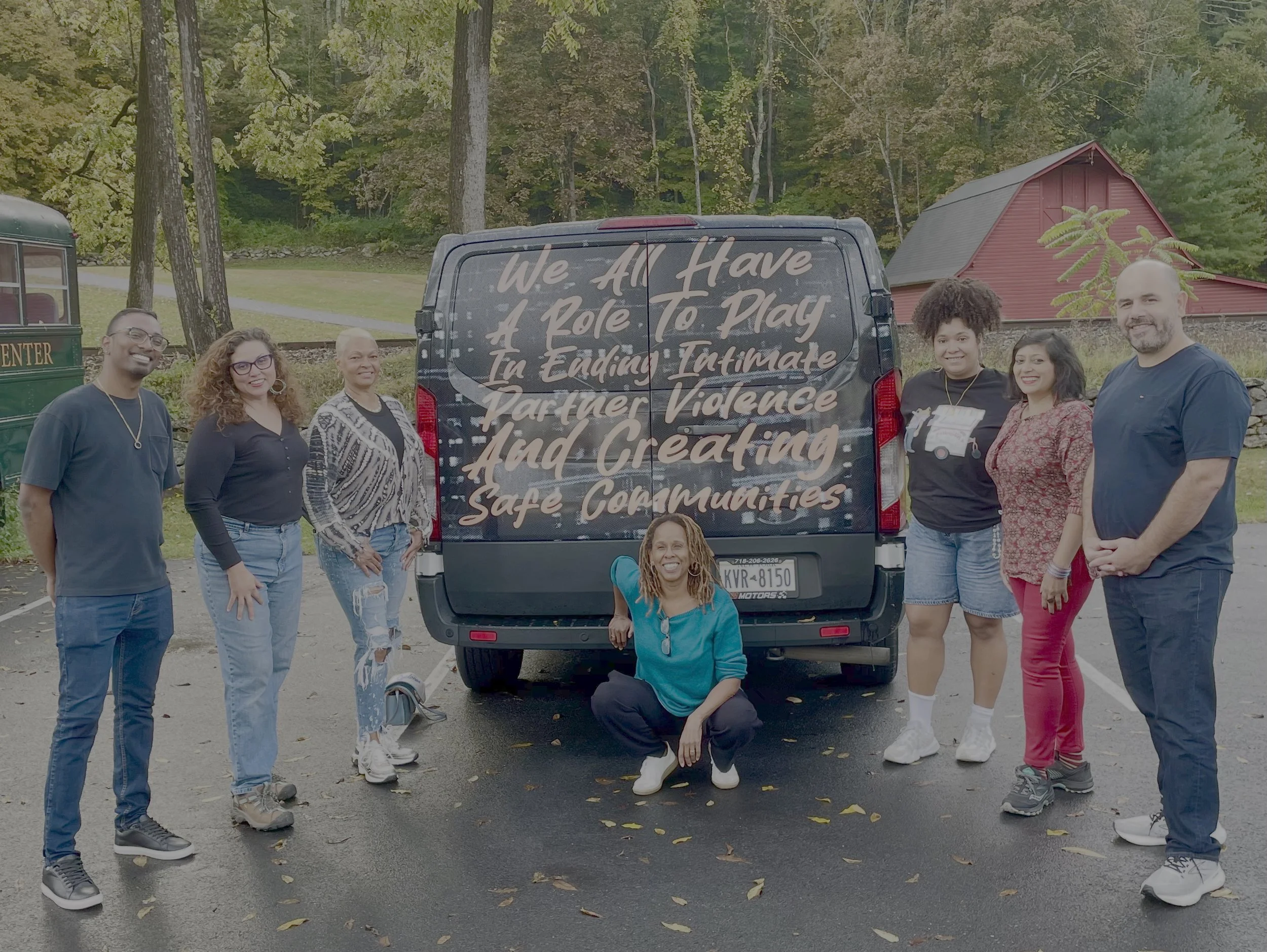
How do we end IPV while going beyond punishment? In this thoughtful episode of The Problem with Punishment podcast hosted by the Justice Beyond Punishment collaborative, hear about addressing IPV through restorative and healing justice approaches. Our Collaborative members Kassiel Gonzalez at VIP Mujeres, Purvi Shah, and Darlene Torres, along with Judith Clark at the Survivors Justice Project, share wisdom, strategies, and lessons learned with host, Kathleen Pequeño. If you think you've heard it all about IPV, have a listen. This podcast makes the case for restorative and healing justice responses to IPV in a way that is fresh, compelling, and uniquely insightful.
From national surveys to anecdotal feedback, we know most intimate partner violence (IPV) survivors neither call police nor seek court intervention. Survivors want ways to stop the violence without systems, and, in some cases, while maintaining their families intact. We also know that families and communities often circumvent traditional IPV programs and systems – shelters, courts, etc. – using, instead, their own methods to address the security and care of loved ones being abused. Over our five years of work, we've furthered responses that support survivors while addressing accountability. We've learned:
How can community-based efforts be survivor-centered, safety-focused, and consistently effective?
To what extent can the traditional movement sanction, support, and incorporate community-based approaches that lead with restorative and healing justice principles?
Yes! A variety of restorative and healing justice practices can be safe and effective in addressing IPV.
Here are the many ways we’ve used these restorative and healing justice practices to expand options for survivors and communities:
-
Collaborative members have explored and enacted practices including the following to expand survivor options:
✴️ A Little Piece of Light offers a safe space for system and trauma-impacted women and girls, providing groups that afford survivors the chance to tell their stories, even when they include harm they have caused to their partners or others. Embodying the intersection between effective and accountable institutions, safe communities and safety in our homes, ALPOL works to heal individuals and the larger community while empowering its base to end the criminal legal system’s cycle of systemic trauma.
✴️ Arab-American Family Support Center’s interventions engage the entire family unit, including survivors, individuals causing harm, and children as they move through systems that often blame rather than heal. Through a restorative and culturally responsive approach, AAFSC works with families to prevent their involvement in legal and family service systems, and helps families who are already involved with systems to safely navigate their exit strategy while honoring healing, accountability, and restoration.
✴️ Recognizing the need to embed all of their work in survivor experience, Violence Intervention Programhas built new restorative programming based on community feedback about what restorative justice means to them. VIP’s new restorative programming acknowledges that working through trauma is a transformative way to achieve peace and (re)gain power and that healing is critical for both people who have suffered abuse and those who have caused it. With services rooted in existing Latinx cultural practices, this new option offers non-carceral, community-based support for families.
-
A common misconception about restorative and healing justice practices is that it always means putting a survivor and a person that caused them harm together in a room to address the abuse. While this is an option in restorative approaches after much preliminary work, it is by no means the only, or even the primary, option. What is true, however, is that restorative and healing justice approaches maintain healing is possible for all parties and offer tools, resources, and programs to foster accountability and healing for people who cause harm.
✴️ The NYC Anti-Violence Project affirms that liberation and healing must be collective and include the voices of survivors of trauma at all points on the continuum of harm. AVP is the only survivor-support agency in New York State focused solely on supporting LGBTQ+ survivors of all kinds of violence and at all levels of marginalization – including working with LGBTQ+ survivors who have caused harm through sexual violence and/or IPV. In 2018, AVP launched a unique 15-week holistic accountability group called TRANSFORM, rooted in a rich tradition of transformative and healing justice work led by LGBTQ and BIPOC (Black, Indigenous and People of Color) activists. TRANSFORM has been a turnkey moment for AVP in expanding the scope of violence prevention work in ways that LGBTQ+ community members have embraced for their own healing journeys.
✴️ Rising Ground’s Respect + Responsibility (R+R) is a community program for people who do not want to cause harm in their intimate relationships and are looking for guidance on being accountable for their behavior while learning about healthier alternatives. Recognizing that trauma and socialization influence the way we relate to ourselves and to others, R&R group facilitators encourage participants on their healing journeys, while motivating behavior change by building hope, empathy, and self-compassion. R&R is designed with a holistic approach to help participants reflect on and take ownership of harmful behaviors and to examine personal beliefs that justify and sustain those behaviors. R&R also provides one-on-one therapeutic support and case management to address social services needs necessary to thrive.
-
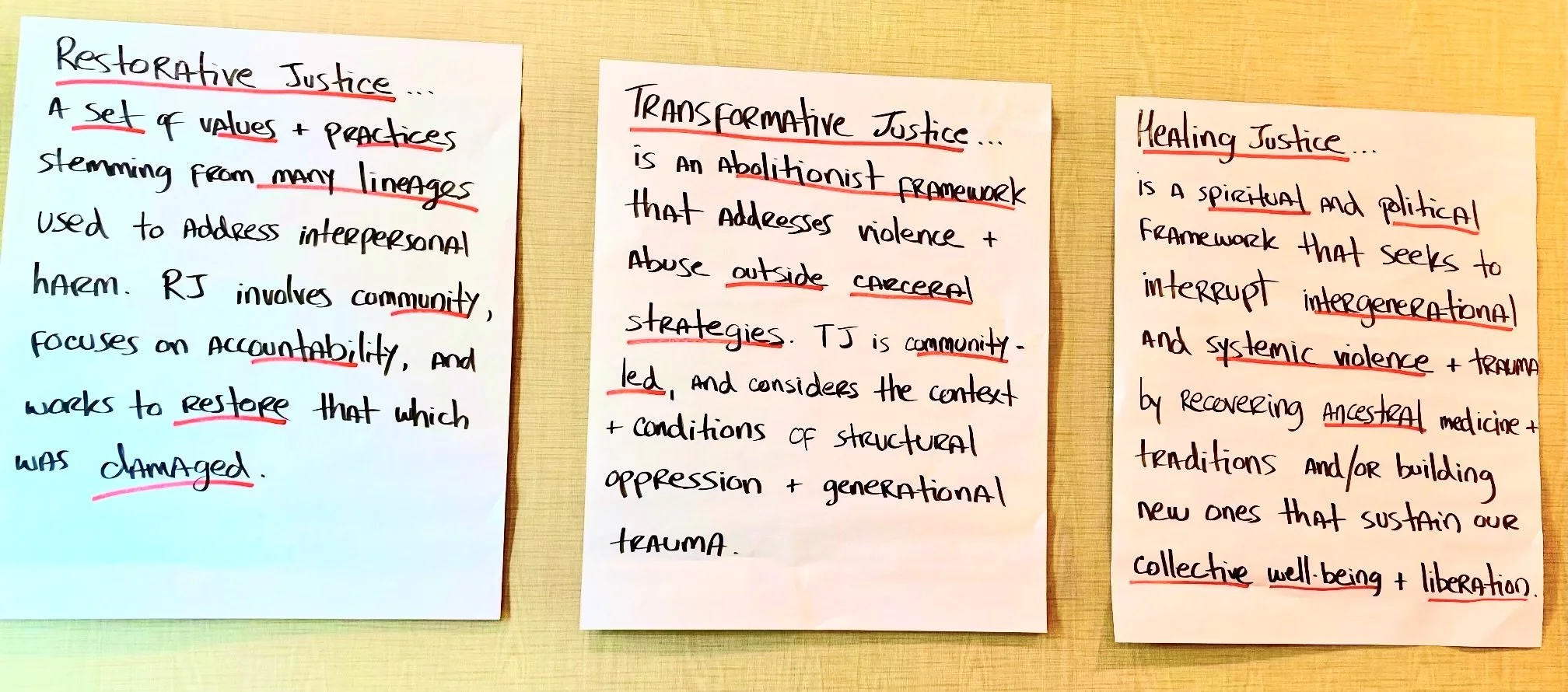
As the term restorative justice became more broadly used, Collaborative members sought to define our own practices, and what we meant by the terms we used. Some members consider their work restorative, transformative, and/or healing justice, or a mix of the three. Some reject the term restorative justice because of the cooptation that allows the term to be used in punishment-oriented systems. As we move forward with our work together, each group defines terms to meet their community's understanding and needs. As a Collaborative, we use “restorative and healing justice” as an umbrella term to encompass the underlying principles we find to be essential. These principles include:
Connecting to historical and systemic factors that influence power, relationships, and choices available to survivors and people who cause harm;
✴️ Addressing survivors’ needs to heal their families as well as themselves, and to embrace that many identify as both survivors and people who have caused harm; and,
✴️ Incorporating community members, rather than working with survivors in isolation – which means practitioners are more effective in their work when doing the work in collaboration.